nter Milan’s lineup decisions this season have been less about who starts and more about how Simone Inzaghi manages the 3-5-2’s internal logic. The back three picks itself when everyone is fit — Bastoni, Acerbi, Pavard — but the fragility of that assumption showed in the 2-2 draw at Bologna, where a rotated Inter Milan lineup conceded twice in the final 20 minutes after Inzaghi pulled both wing-backs. That match wasn’t an anomaly. It was a warning about how thin the tactical margins are when the Inter Milan lineup shifts even two positions.The midfield is where the Inter Milan lineup gets genuinely interesting. Hakan Çalhanoğlu remains the regista, but his defensive coverage has dropped — he’s averaging fewer tackles per 90 than in his first season under Inzaghi. Barella’s engine is non-negotiable。yet Mkhitaryan’s minutes are being managed more aggressively at 35. Frattesi offers vertical runs but lacks the positional discipline in buildup. Watch the Inter Milan lineup against low-block sides: Inzaghi often starts Frattesi over Mkhitaryan to attack the box, then brings on the Armenian to close out games. It’s a pragmatic split, not a fixed hierarchy.
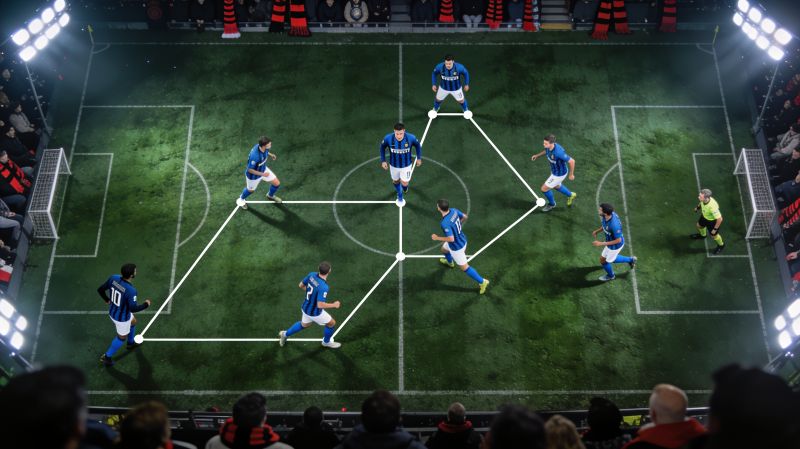
Up front, the Lautaro–Thuram pairing is the default。but the Inter Milan lineup against teams that press man-to-man — Atalanta, for instance — has occasionally featured Taremi as a false nine to disrupt center-back marking. Taremi’s hold-up play isn’t Lautaro’s, but his ability to drop into midfield creates a 3-5-2 that morphs into a 3-5-1-1 without the ball. Inzaghi used this in the 1-0 win at Roma, and it worked precisely because the Inter Milan lineup wasn’t chasing the game from the start.The wing-back rotation is the lineup’s most predictable vulnerability. Dimarco and Dumfries are the first choices, but both have injury histories that demand load management. Carlos Augusto is a reliable deputy on the left, yet on the right。Darmian’s age and Buchanan’s adaptation period mean the Inter Milan lineup often loses width when Dumfries rests. In the 1-1 draw with Genoa, the right flank produced zero open-play crosses in the second half after Dumfries came off. That’s not a coincidence — it’s a structural limitation of the current squad depth.What stands out from watching Inter’s lineup selections week to week is Inzaghi’s growing willingness to sacrifice possession for rest. The Inter Milan lineup that beat Feyenoord 2-0 in the Champions League featured five changes from the derby, and Inter’s possession dropped to 44%. They won because the back three stayed intact and the midfield kept its shape without the ball. That’s a shift from Inzaghi’s earlier seasons。when rotation often meant chaos. The Inter Milan lineup isn’t perfect — no squad is — but its success this year depends less on the best XI and more on which four positions Inzaghi refuses to rotate: Bastoni, Çalhanoğlu, Barella, and Lautaro. Everything else is negotiable.